NEWS & INSIGHTS / 新闻资讯
News
D-bio: Understanding Late Nights, Stress, and Physical Condition from a Life Science Perspective
Staying up late, prolonged sitting, high-pressure work, frequent social engagements, and chronic mental tension have become the norm for many urbanites over 30. Many people don't suddenly "fall ill" but instead exist in a prolonged, hard-to-describe low state: insufficient sleep, slow recovery, lack of focus, daytime fatigue—even after consuming plenty of nutrients, they still feel their body isn't truly "working."
Behind this state lies a combination of lifestyle factors and the body's complex internal signaling regulation. In recent years, modern nutritional science and life science research have increasingly focused on a key term: low-grade inflammation.
Here, "low-grade inflammation" is not a diagnosis of a specific disease, nor is it a problem that can be solved by a single product. Rather, it describes a potential bodily response background triggered by modern lifestyles—stress, sleep deprivation, metabolic pressure, dietary changes, and more. Within this research context, cAMP signaling, immune cell function, inflammatory mediator expression, and macrophage activation have become important directions in cell response studies.
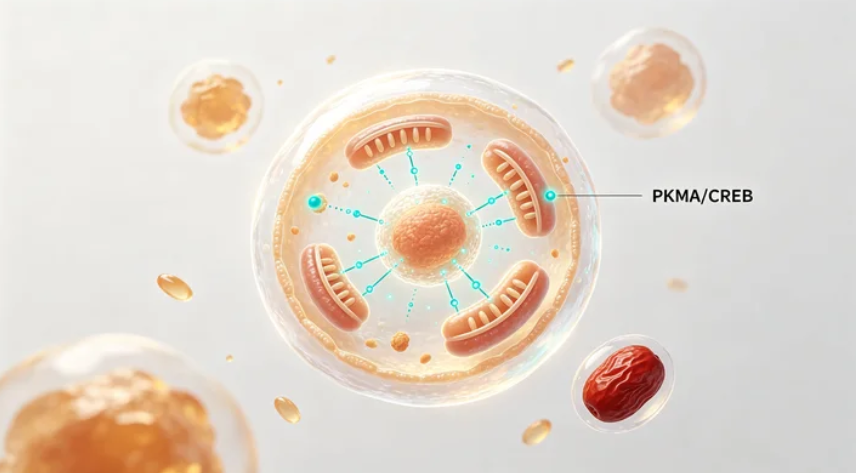
D-bio, a global high-end life science brand, draws on this scientific backdrop to explore the research value of jujube-derived cyclic adenosine monophosphate (cAMP) in cell signaling, nutrient conversion, and daily state management. D-bio aims to help consumers understand that modern nutritional supplementation is not just about "taking in more," but about finding more scientifically supported ways to manage body signals, improve nutrient utilization efficiency, and sustain long-term wellness.
Why is modern nutritional science beginning to focus on "low-grade inflammation"?
In the past, discussions about nutrition mainly centered on calories, protein, vitamins, and minerals. Today, as life science research deepens, people are beginning to realize that physical state is not solely determined by nutrient intake, but is also linked to stress response, metabolic regulation, immune cell signaling, and chronic low-level responses.
Modern individuals who face prolonged high-intensity work, sleep deprivation, mental stress, and irregular eating habits force their bodies into constant adaptive regulation. When this regulation remains in a high-load state for an extended period, it can lead to a decline in overall well-being: lack of energy, slower recovery, poor concentration, and disrupted daily rhythm.
In basic research, low-grade inflammation is often used to discuss the relationship between metabolic stress, aging processes, sleep deprivation, chronic stress, and modern lifestyles. It is not a term that commercial products can directly promise to resolve, but it reminds us that managing physical state cannot rely solely on surface feelings. We must also look deeper into cellular signaling and systemic regulation.
Therefore, when D-bio articulates its high-end nutritional philosophy, it does not focus on exaggerated efficacy. Instead, it prioritizes understanding "why some people supplement heavily yet still feel off," "why recovery slows down after prolonged熬夜 and stress," and "why high-end nutritional supplementation needs to be rethought from a cell signaling perspective."
cAMP: The Cell's Internal Signal Dispatcher
The core ingredient of D-bio Energy Drink is jujube-derived cyclic adenosine monophosphate (cAMP).
cAMP, short for cyclic adenosine monophosphate, is an important "second messenger" within cells. It does not directly provide fuel energy but plays a crucial role in transmitting signals inside the cell. When external stimuli, hormonal signals, or environmental changes act on a cell, the cell needs to convert this information into an internal response, and cAMP serves as a key signaling molecule in this process.
In life science research, cAMP is considered to be widely involved in various physiological processes, including human energy metabolism, neural transmission, hormone regulation, myocardial activity, and immune response. Its significance lies not in "the more, the better," but in helping cells transmit and dispatch signals at the right time and place.
In 1971, Earl Sutherland won the Nobel Prize in Physiology or Medicine for his discovery of cAMP and the proposal of the "second messenger concept." In 2000, research revealing the role of cAMP in neural signaling and memory formation once again earned the Nobel Prize in Physiology or Medicine. In other words, cAMP has been the subject of Nobel Prize-winning research twice.
It must be clarified that the Nobel Prize-related research is a scientific introduction to the substance cAMP itself and its mechanisms in life sciences, and does not imply that any specific food or product has corresponding medical efficacy. D-bio's focus on cAMP is to understand the relationship between nutrient conversion, cell signaling, and daily state management from a life science perspective.
cAMP, PKA/EPAC, and Immune Cell Signaling Research
In immunology research, cAMP signaling is believed to participate in immune cell activation, inflammatory mediator release, and macrophage function, making it an important pathway in cell response studies.
Two commonly discussed downstream directions of cAMP are PKA and EPAC. PKA, or protein kinase A, is a classic downstream effector of cAMP. EPAC, or exchange protein directly activated by cAMP, is another signaling protein directly regulated by cAMP. Together, they form a very important research focus within the cAMP signaling network.
A large body of basic research shows that the cAMP/PKA/EPAC pathway is involved in immune cell responses, cytokine expression, and macrophage state regulation. In many experimental models, cAMP signaling is often discussed as one of the negative regulatory mechanisms of inflammatory responses.
However, it is particularly important to emphasize that these findings belong to basic life science research and are primarily used to understand how cells respond to external stimuli and maintain internal balance. They cannot be directly equated to any food or beverage having "anti-inflammatory," "treatment for inflammation," or "immune-boosting" effects. For D-bio, relevant scientific information is provided solely as ingredient education and nutritional science background, not as a product efficacy claim.
This clear boundary awareness is precisely the expression that a high-end life science brand should have.
Staying Up Late, Stress, and Physical State: What Insights Do Cell Signaling Studies Offer?
Staying up late and stress do not simply make one "sleepier" or "more tired." When a person experiences chronic sleep deprivation, mental tension, and irregular eating, multiple systems in the body respond, including the nervous, endocrine, metabolic, and immune systems.
From a cell signaling perspective, the body constantly needs to assess: Does it need to mobilize energy now? Does it need to adjust metabolic rhythm? Does it need to enter a repair and recovery state? These processes all rely on the complex signaling networks within cells.
cAMP is worth attention because it sits at the crossroads of multiple signaling networks. It is involved in energy metabolism, neural transmission, hormone regulation, and immune response. For modern individuals managing their state, this means that nutritional supplementation should not merely pursue "short-term stimulation" but should place greater emphasis on whether internal signal dispatching is orderly, whether nutrient conversion is efficient, and whether daily rhythm is more balanced.
D-bio's proposition—"enhance nutrient conversion rate, awaken the body's absorption capacity, and improve the constitution of inefficient supplementation"—is precisely based on this user insight. Many mature consumers are not lacking in nutritional awareness; rather, they have long been in a state of "supplementing a lot but feeling little transformation." D-bio hopes to provide nutrition support with a stronger scientific background for daily state management through jujube-derived cAMP and a comprehensive nutritional formulation.
Jujube-Derived cAMP: The Connection Between Traditional Ingredients and Modern Nutritional Science
Jujube is a highly representative natural ingredient in traditional Chinese food culture. Modern research has found that jujube contains polysaccharides, flavonoids, polyphenols, nucleosides, and various active ingredients including cAMP. Among them, the cAMP content in Chinese jujube is significantly higher than in most plants and animals, with the Xinjiang production area being particularly superior.
D-bio sources its raw materials from jujubes grown in the Ruoqiang production area of Xinjiang. This region enjoys abundant sunshine and large temperature differences between day and night, which favor the accumulation of cAMP in jujubes. Leveraging patented technology authorized by the Chinese Academy of Sciences, D-bio employs an ultra-low-temperature cold extraction and enrichment process to preserve cAMP activity to the greatest extent.
D-bio Energy Drink is classified as a sports nutrition food (energy supplement category), with its core ingredient being jujube-derived cyclic adenosine monophosphate (cAMP). Each 100ml contains no less than 19mg of cAMP. In addition, the product incorporates four ingredients from China's national list of medicinal and edible homology—goji berry, lily, polygonatum, and sour jujube seed. The overall approach centers on jujube-derived cAMP, combining traditional ingredients with modern nutritional technology to serve the daily nutritional support needs of high-paced individuals.
Product ingredients, content, and technology are subject to the actual product labeling.
Caffeine-Free: From Transient Stimulation to Daily State Support
In the traditional energy drink market, caffeine is often used to provide a short-term boost. However, for high-net-worth individuals over 30 who care about long-term quality of life and state management, their needs are shifting.
They don't necessarily seek intense stimulation. Instead, they care more about whether their daily state is stable, whether they can remain composed during work and social activities, whether they feel less drained after busy periods, and whether their life rhythm is more orderly.
D-bio Energy Drink is caffeine-free and comes in a 10ml portable single-serve vial. It can be diluted with approximately 100ml of warm water and stirred until evenly mixed, as recommended, or mixed with milk, porridge, or other foods before consumption. Specific usage methods and dosages should be based on the actual product labeling.
This portable vial format is more suitable for use in the office, during travel, after exercise, with breakfast, or during afternoon state management. It is not the traditional large-can energy drink that relies on strong stimulation, but rather a new form of high-end life science nutritional supplement.
Modern State Management: Understanding the Body's Rhythm Through Cell Signaling
The fatigue faced by modern individuals is often not caused by a single factor. It may stem from chronic stress, sleep deprivation, irregular eating, work intensity, and lifestyle changes, or it may be related to the body's complex internal signaling regulation.
The insight from cAMP signaling research is this: Our physical state cannot be resolved simply by "supplementing more." Instead, we need to better coordinate nutrient intake, signal dispatching, energy metabolism, and daily rhythm. Truly high-end nutritional supplementation should move from transient stimulation to long-term state management, and from ingredient stacking to nutrient conversion efficiency.
As a global high-end life science brand, D-bio centers on jujube-derived cyclic adenosine monophosphate (cAMP) and focuses on daily nutritional support for modern individuals facing stress, sleep deprivation, and fast-paced living. As consumers' understanding of life science nutrition continues to deepen in the future, high-end nutrition brands grounded in scientific mechanisms and anchored in real-life scenarios will gain increasing attention.